


Blog marketing still works in 2026. But the rules have changed. A blog is no longer just for clicks.
It supports AI search results, buyer research, and content reuse across platforms.
People ignore ads. Instead, they want clear answers, proof, and real experience. Blogs give them all three.
Here are eleven ways modern brands use blogs to build authority and stay visible in an AI world.
Highlights
Successful blog marketing in 2026 relies on a clear structure and original data. You must provide specific facts that AI models need to cite your brand.
At the same time, it’s important to share the personal experiences that human readers value. These examples show how top brands use these strategies to stay visible and build authority.
Every blogger, writer, marketer, or sales manager has come across the HubSpot blog at some point. It’s understandable. They publish articles on a variety of topics. Think content creation, sales, communication, and social media management.
The HubSpot blog is a treasure of useful information that always appears on the first page of search results and in Google’s AI Overviews (AIOs).

The company has been using its blog as a marketing tool for years. However, they eventually noticed that the number of articles had reached a critical level. Their SEO-optimized articles on comparable topics began to compete for search engine visibility.
HubSpot shifted to the topic cluster model to avoid keyword overlap and internal competition. This model uses one main page for each topic. Supporting articles link back to it.
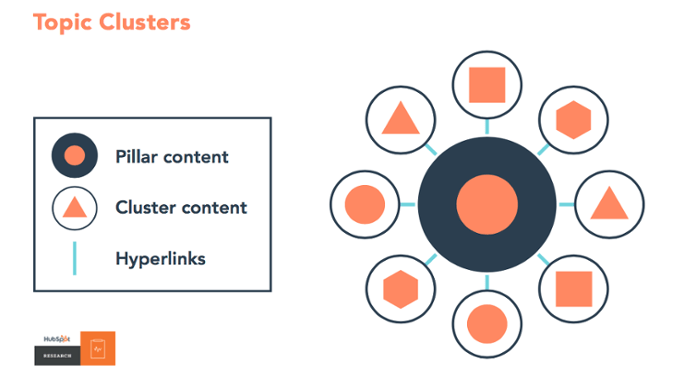
The topic cluster model keeps a blog organized and helps guide readers toward conversion.
This is especially true when you combine it with project management software. This helps streamline content creation and publishing.
It also helps both search engines and AI systems understand content relationships.
High-quality, actionable content helped Ahrefs become an industry leader. Ahrefs is a powerful toolkit for backlinks, SEO analysis, and research. It helps marketers understand how their sites perform in search.
“We were able to create a product that promoted itself in the early stages. We grew without a marketing team in the early years because our entire focus was on the product,” said Dmytro Gerasymenko, the company’s CEO.
This same approach can help scale your content marketing organically through product-driven growth. Dmytro and his team built a high-quality product with unique data that SEO specialists wanted.
They promoted it exclusively through SEO forums, with no marketing or investor involvement.
Ahrefs now has a blog with several useful articles that subtly promote its product.
On the blog, they simply outline best practices on Ahrefs to help readers improve their content marketing and SEO outcomes.

They show expertise by teaching what they already know. These industry experts continually improve, expand their knowledge, and set ambitious goals. Their successful content strategy is the best demonstration of their tool in action.
Many users no longer click on blue links. They read the AI Overview at the top of the search results. Today, AIOs show nearly 13% of Google searches, Ahfefs reports.
Hostinger treats its blog as a database of facts. As a result, they capture the attention of users who stay on the search page.

Instead of long articles alone, they use highly structured data, clear definition boxes, and natural headings that AI models like ChatGPT can easily scrape.
They do this by providing direct answers to technical questions in the first paragraph. This ensures their brand name appears in the citation list of every AI response.
And even if a user doesn’t visit their site, the AI-generated answer cites them as the authority. This builds trust and keeps Hostinger at the top of the “shortlist” when users are ready for a hosting plan.
Hostinger’s blog functions as a primary engine for visibility, where the summary is the final destination.
Depositphotos is a fast-growing stock content platform with photos, vectors, illustrations, videos, and music. They use their blog to build expertise in photography, design, and marketing, as well as to inspire, entertain, and educate their readers.
The Depositphotos blog targets people in creative industries, from photographers and marketers to designers and artists, including event photographers. They take these professionals’ pain points into account when creating content.
As Depositphotos is one of the world’s leading stock content marketplaces, many creative industry experts rely on their knowledge, listen to their recommendations, and look up to them. Depositphotos shares visual and graphic design trends every year.
They present color trends, creative palettes, and curated collections every season. Apart from trends, you’ll find industry news, events, interviews with interesting creatives, and more on their blog.

Depositphotos aims to change people’s minds about stock photos through their blogs and projects. They want to take down the stereotype that stock photography is boring, so they’re working hard to raise awareness about and highlight authentic visuals in their library.
Depositphotos wants to honor all the talented contributors behind their visuals.
This is why they create projects such as The Photographer’s Way, which share unique stories about becoming a visual artist and provide independent professionals with international exposure.

Zety is an online resume builder that makes it simple for job seekers to create a professional CV using pre-made templates.
Beyond using their blog to promote products, the company provides job seekers with professional career guidance from specialists.
For anyone browsing their site, it’s clear that each article targets a clear user need.
For example, their article “What skills to put on a resume” attracted over 113,000 high-intent. That traffic drives leads and sales. And in 2026, this type of content is crucial. It provides verified data that AI models use to answer user queries.

This strategy also works because it aligns with Experience, Expertise, Authoritativeness, and Trustworthiness (E-E-A-T).
Zety shows real expertise, clear authorship, and trustworthy guidance, which search engines now expect from career content.
Adam Enfory shows how personal blogging can work when experience and authorship are visible.
He started his blog in 2019 and treated it as a real business from day one. He shared what work, what failed, and how he made decisions along the way. This transparency helped him build trust fast.
The blog scaled quickly during an earlier search era, before today’s level of competition and AI filtering. Results like this are harder to repeat now, but the underlying principles still apply.

On his blog, you’ll find a wide range of topics. This includes:
In 2026, personal branding may no longer be a growth hack. It is, however, a baseline requirement for credibility. Faceless niche sites struggle to survive, especially in competitive categories.
Adam’s success reflects E-E-A-T in action. His content shows firsthand experience, clear authorship, and public accountability that AI can’t replicate. These signals matter more than niche positioning alone.
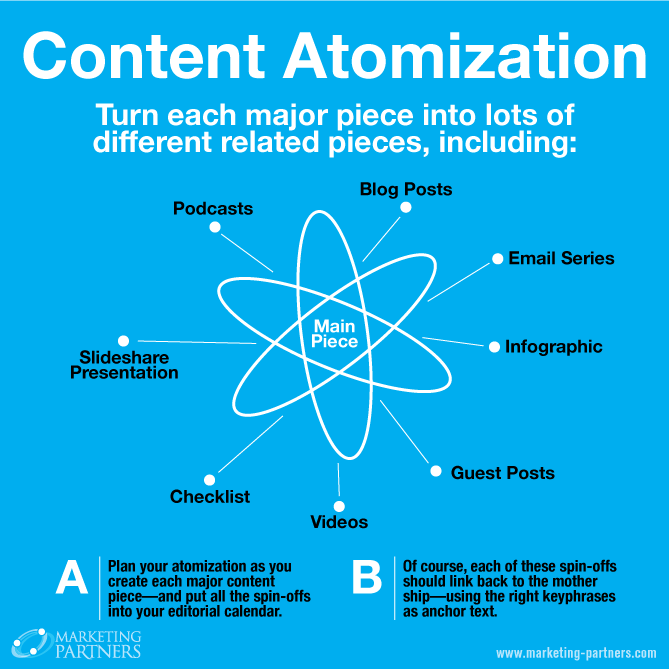
Surfer uses its blog as a base for all its marketing. Every long article works as “source code” for many other platforms. Their team breaks one post into small parts to share everywhere.
The team turns these parts into TikTok video scripts and LinkedIn slides. This create-one-share-everywhere method helps them reach more people with less work.
Here’s a quick illustration showing how Surfe’s modular content strategy works:
MailerLite is a website builder and email marketing tool. It caters to both small and large businesses. MailerLite’s main concept is simplicity. Their content approach is based on their product and company values.
MailerLite’s blog focuses on topics that interest its users and delivers an outstanding product experience. The blog provides a range of marketing advice, particularly on email marketing.
Their detailed approach to writing sets them apart from others. The easy-to-read blog and its clean design reflect the principal idea around their product, supported by intuitive internal tools that ensure consistent brand messaging and reiterate the value prop that email marketing shouldn’t be difficult.
MailerLite’s first company value is to focus on people. It’s evident in the way they communicate. Today, MailerLite employs a fantastic multi-cultural team of over 100 people. MailerLite incorporates team photos into its content and highlights company stories and team member social media posts.

“We want our customers to know us as people. We’re all people interacting with people” MailerLite says. They believe their success depends on their customers’ success.
That’s why they feature consumer stories, build communities with similar goals, and connect customers with experts and partners.
Superside is a global design company known for supporting in-house creative teams at enterprise scale.
While many blogs focus on SEO hacks or product tutorials, Superside has carved out a unique space in the content world. They do this by combining deep creative expertise with real-world application of AI design tools, without losing the human touch.
Their blog explores how enterprise design teams can scale production efficiently. They have dozens of articles that break down workflows, systems, and tested strategies to help marketers and designers move faster while maintaining brand quality.

What makes their approach stand out is the balance of future-forward topics and grounded, actionable advice.
For instance, their AI-focused blog content doesn’t just theorize. It draws on experience from delivering over 500 AI-enhanced design projects. Readers learn how teams are integrating custom image models, creative automation, and brand-safe AI systems into their daily operations.
The focus is always on solving real bottlenecks: creative content velocity, visual consistency, and team collaboration.
At the same time, Superside’s editorial voice often returns to a recurring theme: the power of community.
Zapier adds functional tools to its blog posts. These tools solve the reader’s problems immediately. Users can find interactive calculators and workflow builders inside the articles.
The team builds content around specific automation tasks. A user can click one button in the blog post to set up a task in their own account.

One simple blog post is suddenly a helpful tool. It connects reading with action. This makes the blog a high-value resource that users visit often.
GoPro uses its blog as a hub for social media platforms. They create searchable assets for TikTok, Instagram, and YouTube.

In 2026, many users search for keywords such as “best travel cameras” on social apps rather than on Google.
The team writes blog posts that act as scripts for short videos. They use keyword research to find what users ask in social comments. Then, they answer those questions in both a blog post and a 60-second Reel.
As a result, GoPro’s content appears in search results across all platforms. This content marketing strategy helps them reach younger audiences who prefer video over text.
Blogs are still relevant in 2026. They provide the verified data that AI search engines need to recommend your brand. They support your sales team and fuel your social media channels. Most importantly, blog marketing creates a human connection with your audience.
These strategies and real-world examples help you build authority and stay visible on the modern web.
Publishing different content styles takes time. Don’t let manual uploads slow you down. Wordable lets you export your Google Docs directly to your blog in seconds.
Ready to scale your 2026 content strategy? Get Wordable today.